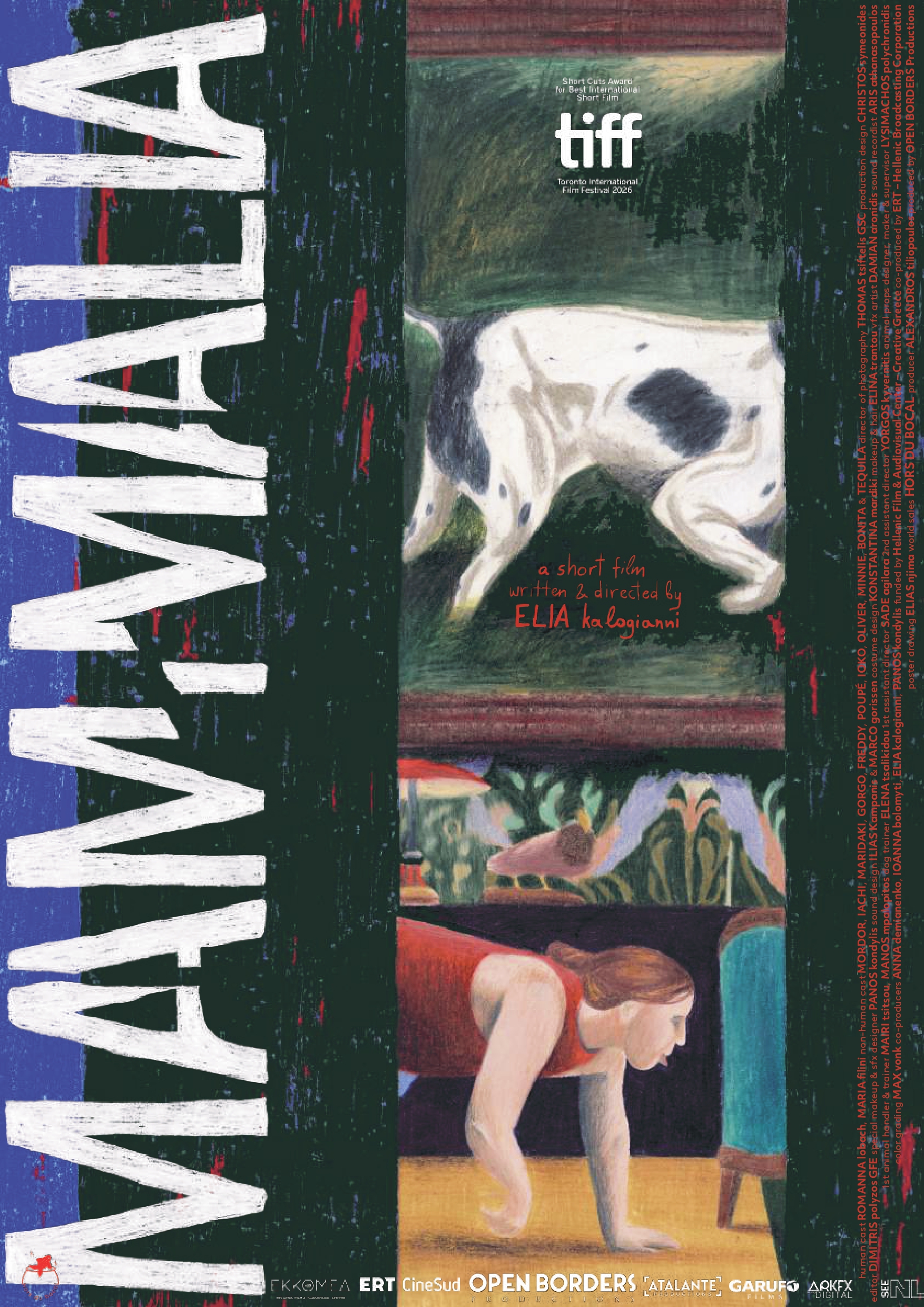
Elia Kalogianni
2026
Greece, Netherlands
Greek
fiction
horror | drama
20 minutes
Open Borders Productions
Antonia (45) and Mavra (27) share a secluded domestic space where routines of care structure their daily lives alongside a group of domesticated animals. What initially appears as a system of mutual dependence gradually reveals an unstable hierarchy. Antonia assumes the role of caretaker, provider and authority, while Mavra occupies a more ambiguous position, both participant and subject within this controlled environment. As their routines intensify, gestures of care begin to shift into mechanisms of control. Feeding, cleaning and tending to the animals become ritualized acts that mirror the dynamics between the two women. Mavra's compliance slowly gives way to resistance, unsettling the fragile balance that sustains their coexistence. The presence of the animals, silent witnesses and victims, amplifies the tension, exposing the violence embedded within systems of protection and ownership. In moments leading up to acts of killing, power circulates unpredictably, destabilizing roles of dominance and submission. Told through a hyper-real and non-linear structure, MAMMALIA blurs distinctions between human and animal, care and exploitation, intimacy and brutality. As boundaries collapse, the film confronts the uneasy question of what defines humanity when survival, instinct and control take precedence. What are we? Humans? Or Animals? Or Savages?
Antonia | Maria Filini
Mavra | Romanna Lobach
Writer & Director | Elia Kalogianni
Producer | Alexandros Tiliopoulos
Production Company | Open Borders Productions
Co-Producers | Elia Kalogianni, Anna Demianenko, Ioanna Bolomyti, Panos Kondylis
Co-Production Companies | GARUFO Films, CineSud, Atalante Productions, ARXFX Studio
Executive Producer | Romanna Lobach
Director of Photography | Thomas Tsiftelis GSC
Production Designer | Christos Symeonides
Editor | Dimitris Polyzos GFE
Sound Design | Ilias Kampanis, Marco Gorissen
Sound Mix | Ilias Kampanis, Anastasios Katsaris
Original Song | "Lilith" by Nena Ventsanou
Colour Grading | Max Vonk
Visual Effects | ARKFX Studio Digital
Costume Design | Konstantina Mardiki
Hair & Makeup | Elina Trantou
Special Makeup & Effects Design | Panos Kondylis
Animal Props Design, Fabrication & Supervision | Lysimachos Polychronidis
First Assistant Director | Sade Agilara
Animal Handling & Training | Mairi Tsitsou
Animal Trainer | Manos Mpalopitos
Dog Trainer | Elena Tsalikidou
Post-Production | Oslik Post
With the support of | EKKOMED, ERT S.A.
2026
Toronto International Film Festival – Short Cuts | Toronto, Canada
2026
Toronto International Film Festival – Short Cuts Award for Best International Short Film | Toronto, Canada
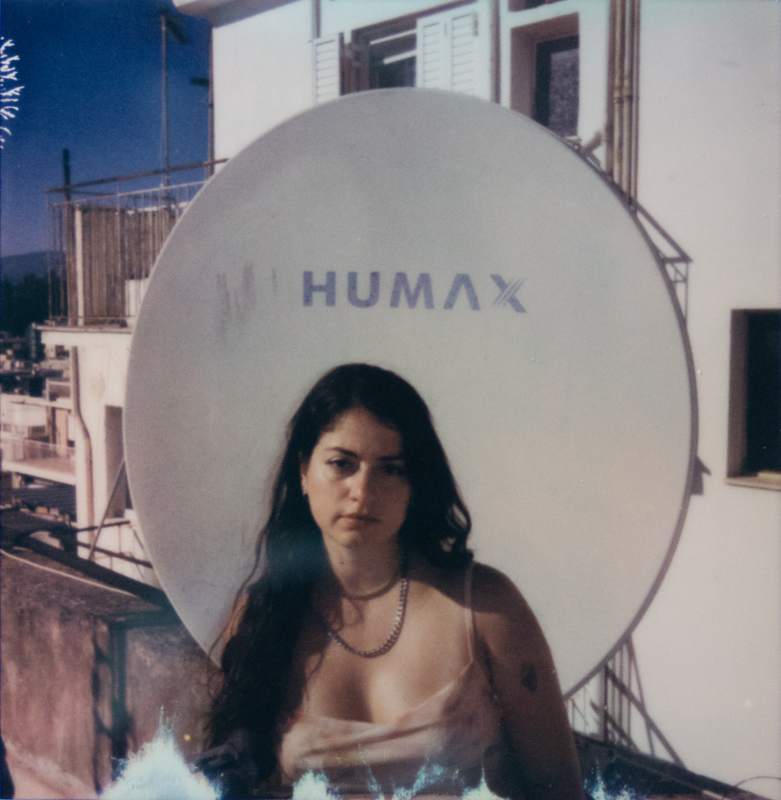
Elia Kalogianni (b. 1995) is an interdisciplinary artist and filmmaker based between Athens and Amsterdam. Her work has been presented internationally across film and contemporary art contexts, including the International Film Festival Rotterdam (IFFR), the Netherlands Film Festival, the 60th International Art Exhibition – La Biennale di Venezia (Greek Pavilion), the Stedelijk Museum, Art Rotterdam, and ITA.
Her latest short film, MAMMALIA (2026), premiered in the Short Cuts programme of the Toronto International Film Festival (TIFF) where it received the Short Cuts Award for Best International Short Film. She has also been selected to participate in Sarajevo Talents 2026. Alongside her artistic practice, she works as an Exhibition Floor Manager at the EYE Film Museum in Amsterdam.
She is currently developing her debut feature film, Of Cleanliness.
- Soldier 365 (2019, experimental short film)
Growing up with a father who was a surgeon and a mother who was a pharmacist, whose professions often shaped the conversations at home, I developed an early familiarity with biology, human and animal anatomy, death, blood, and a profound respect for every living body. As a child, I was fascinated by questions such as: What happens if you cut a human body open? What does the inside of the brain look like? Why do cats have tails? These questions stayed with me long before I understood their philosophical implications.
MAMMALIA brings these childhood curiosities into dialogue with my more recent concerns about meat overconsumption, animal abuse and exploitation, systems of power, our everyday exposure to violence, social cannibalism, the competitive dynamics between women within patriarchal structures, and the notion of confinement.
The house becomes a closed ecosystem, a microcosm of society, where care, domination, violence, and power are constantly rehearsed and renegotiated. Through this surreal premise, the film reflects on speciesism, anthropocentrism, the fractured coexistence between humans and nature, as well as the invisible mechanisms that shape human relationships, cohabitation, and authority.
By observing nature through the unfamiliar setting of a domestic space, I seek to explore the ancient relationship between humans and animals, and ultimately, between humans themselves. I am interested in how care can gradually become control, intimacy can turn into domination, and coexistence can evolve into a constant negotiation of power. MAMMALIA uses the domestic space as a microcosm to reflect on contemporary consumer society and the invisible structures that govern our relationships with animals, nature, and, ultimately, one another.