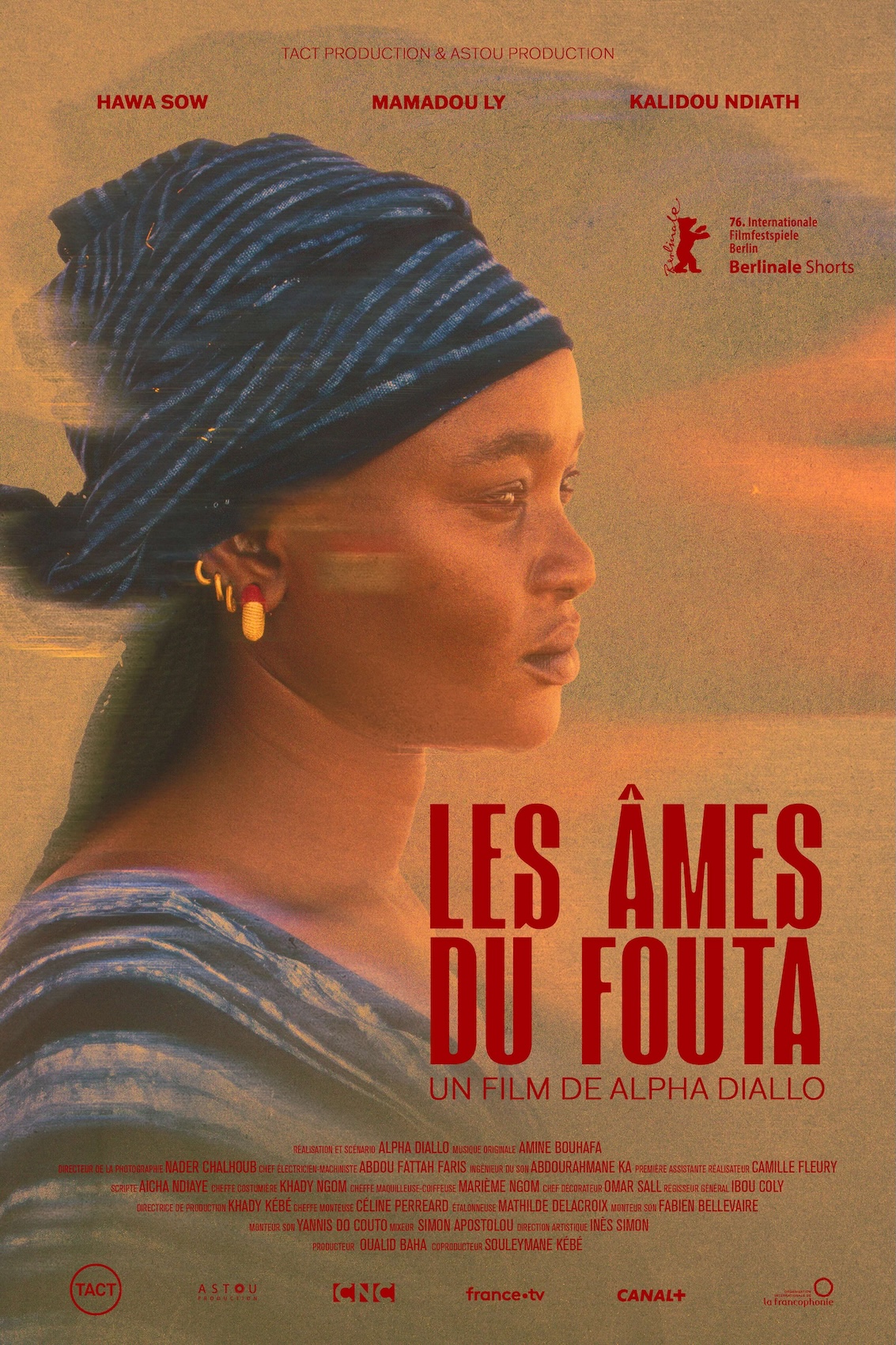
Alpha Diallo



2026
France, Senegal
Pulaar
fiction
drama | family | women
18 minutes
Tact Production, Astou Production
In a Senegalese village, Penda and Moustapha have lost their 17 year old son due to an overdose. Despite their grief, Moustapha makes a radical decision : their son will not be buried in the family cemetery because the reasons for his death makes his soul impure. Penda must find a solution on her own so that her son can rest in peace beside her, against all odds.
Penda | Hawa Yéro Sow
Moustapha | Mamadou Ly
Thierno Amadou | Kalidou Ndiath
Ibrahima Diallo |
Mariam Aliou Sy |
Sidy Boubou Ba |
Director | Alpha Diallo
Screenplay | Alpha Diallo
Director of Photography | Nader Chalhoub
Sound Engineer | Abdourahmane Ka
First Assistant Director | Camille Fleury
Editor | Céline Perreard
Composer | Amine Bouhafa
Colorist | Mathilde Delacroix
Sound Mixer | Simon Apostolou
Laboratory | La Ruche Studio
Production | Tact Production – Oualid Baha
Co-production | Astou Production – Souleymane Kebe
Partners | CNC, France Télévisions, Canal+ Afrique, OIF
Berlinale - Berlin International Film Festival (Berlinale Shorts) - 2026 | Berlin, Germany
REGARD - Festival international du court métrage au Saguenay - 2026 | Saguenay, Canada
Diani Film Festival - 2026 | Diani, Kenya
Minikino Film Week, Bali International Short Film Festival - 2026 | Bali, Indonesia
Afrika Film Festival Köln - 2026 | Cologne, Germany
Tirana International Film Festival - 2026 | Tirana, Albania
IndeFilm Fest Le Havre - 2026 | Le Havre, France
REGARD - Festival international du court métrage au Saguenay (Saguenay) | Jury's Prize
Diani Film Festival (Diani) | Best International Short Film
Born in Paris, France in 1991, the screenwriter and director is of Senegalese origin. He studied history at the Sorbonne and has also participated in various writing programmes and residencies. SOULS OF FOUTA (Les âmes du Fouta) is his first short film as a director.
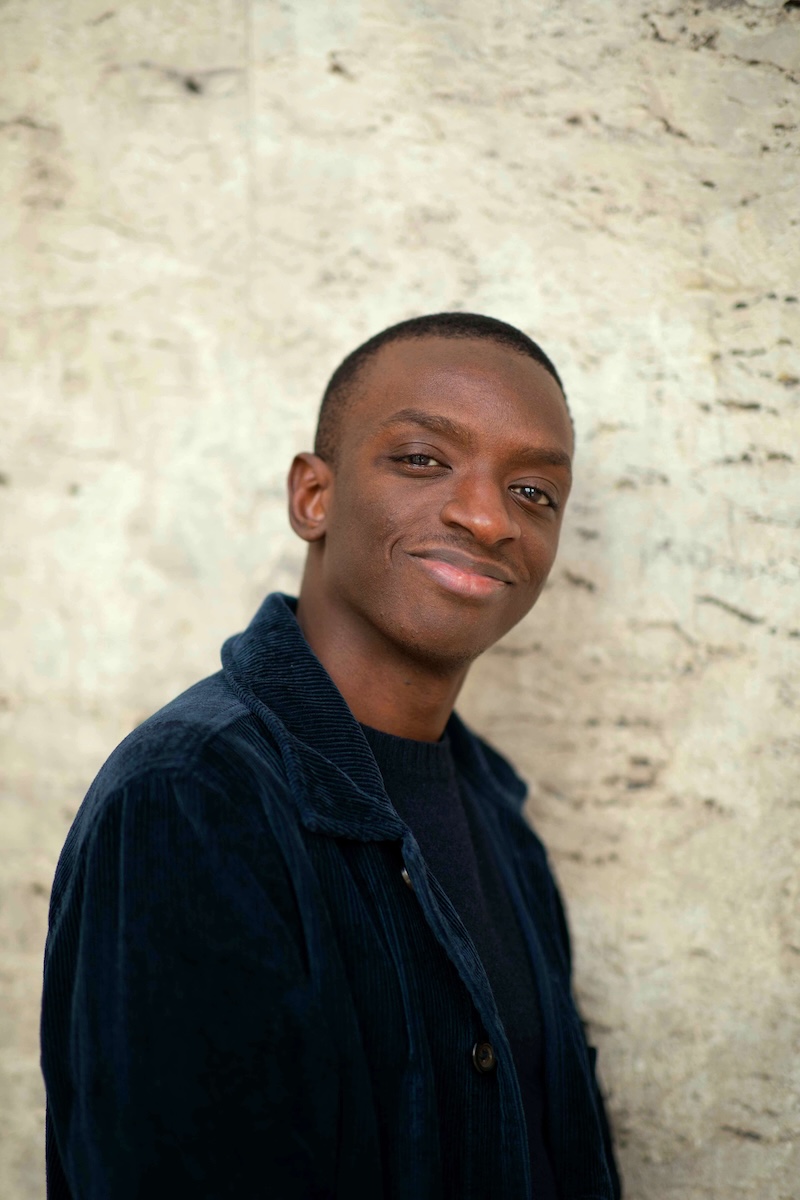
In August 2006, when Alpha Diallo was fourteen, he traveled to Senegal, his country of origin, for the first time. During this trip, he met his entire fulani family and spent a month in his parent's native village, in the north of the country, in a region known as the Fouta. There, Alpha learned of the death of his cousin's best friend from a drug overdose. He was sixteen years old. Members of his family refused to bury him in the village cemetery, claiming that his soul was "impure". Alpha Diallo remember, in the midst of adolescence, this tragedy deeply shook him. He had never before been confronted with the death of a boy from his own generation. This story, where his family out of shame, did not bury him alongside their own, tore Alpha apart. Nearly ten years later, in 2015, he returned to Senegal for the second time. He was able to see my parent's village no longer through the eyes of an adolescent, but as a young adult facing the world. Once again with his cousin, he told him how the death of his best friend had changed him and altered his way of seeing the world. He spoke to Alpha at length about mercy and love. At the time, Alpha Diallo did not feel legitimate enough to tell and carry this story, as it deals with a subject that is both taboo and deeply intimate. But through his artistic journey and the resonance of this universal tragedy, he felt compelled to draw the contours of this story. He began writing the short film in 2020, with sorrow, and suffering as its guiding thread. It was a long process of stripping the writing down to its core, during which he divided the story into three chapters : incomprehension, doubt, and liberation.
SOULS OF FOUTA sensitively explores the place left for those who stray from a group’s norms, even after death. Through this deeply sincere family story, the film explores the weight of tradition and collective judgment, as well as the strength of maternal love, with a deeply universal resonance.
The director’s debut film, it stands out for the confidence of its filmmaking and the delicacy of its approach. The cinematography is particularly refined, with several striking shots, especially in the night and twilight scenes.
Above all, its emotional power deeply moved us — even bringing some of us to tears.